Mar
18
2026
This year, we are celebrating Tangible Engine’s 10th birthday, and are looking back at the way the object recognition software has evolved and grown with our users. While the core of Tangible Engine has largely remained the same over the last decade, we have made many updates over the years, and are always looking for new ways to add to and improve the tool.
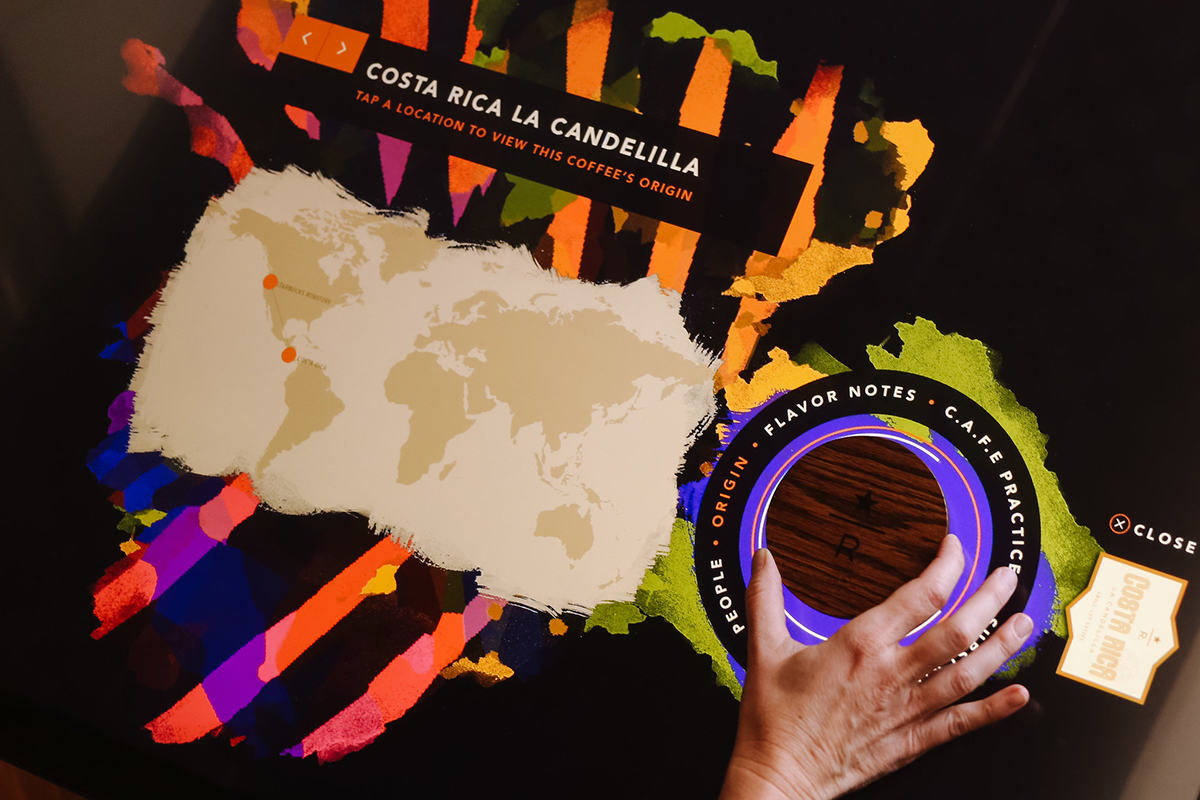
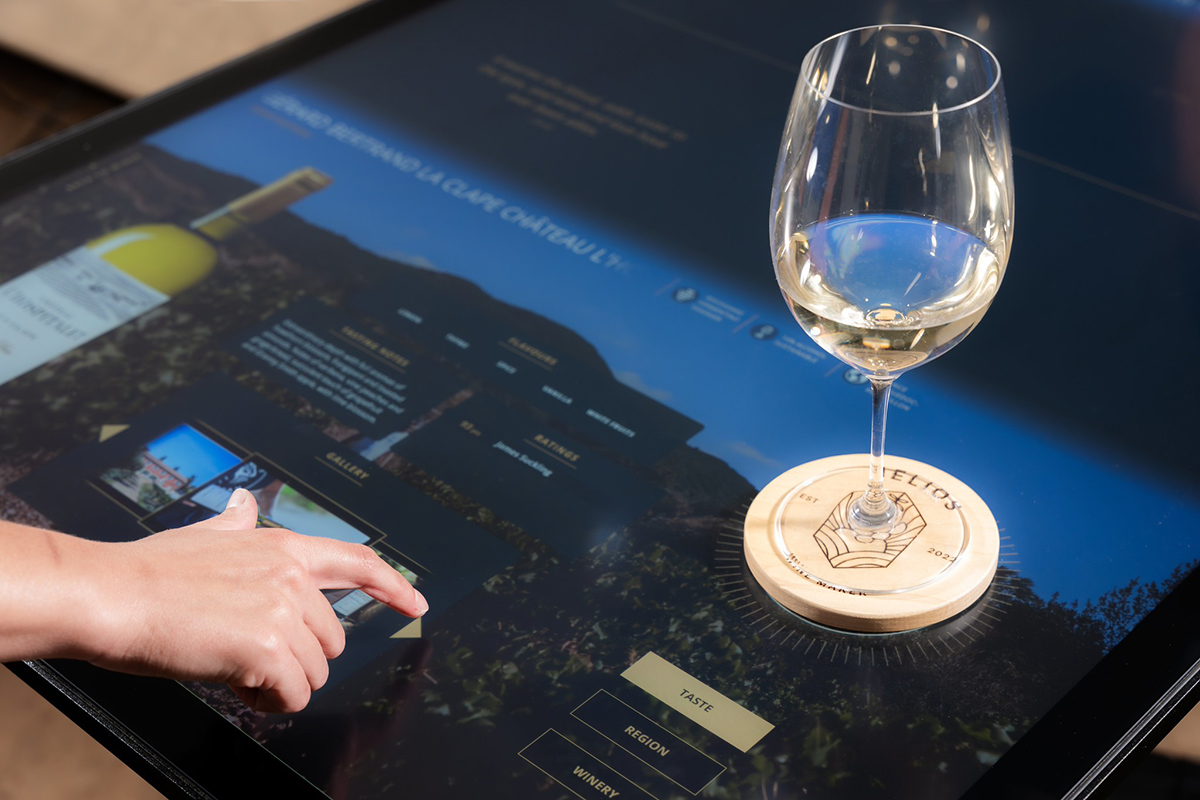
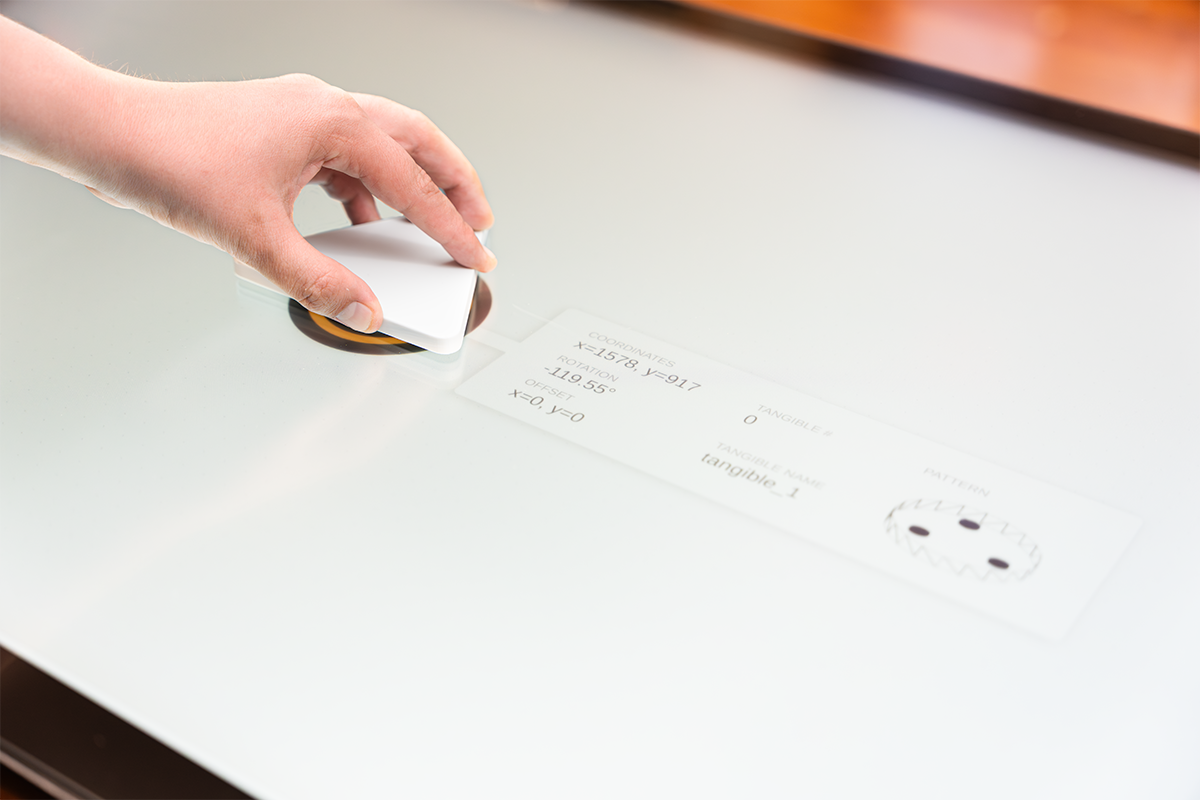
While version 1.0 of Tangible Engine was officially released in 2016, we were actually building interactives with it as early as 2015. The Interactive Coffee Experience and JCB Tasting Salon were early experiments in object recognition, providing a unique hybrid experience for users to learn about coffee and wine. The challenge we were looking to solve was how to build a tangible marker that would work on a projected capacitive (PCAP) touch screen. At the time, object recognition was only found on IR or optical touch surfaces, and we had already grown our touch table lineup into the newer, more responsive PCAP displays. After a lot of brainstorming and research, we landed on what we now call our “pucks” - tangible objects made of a rubberized conductive polymer that is 3D printed in house with unique patterns - that can be recognized on our touch tables with no need for screens, cameras, or optics whatsoever. And thus, Tangible Engine was born.
As time passed, we updated version 1, with the addition of support for multiple connected displays and improved tracking fidelity. We added the Tangible Engine Media Creator, a rapid prototyping tool that allowed designers with little to no programming experience to create mixed-reality applications. We also wrote a white paper on the power of tangible user interfaces and the design considerations associated with them.
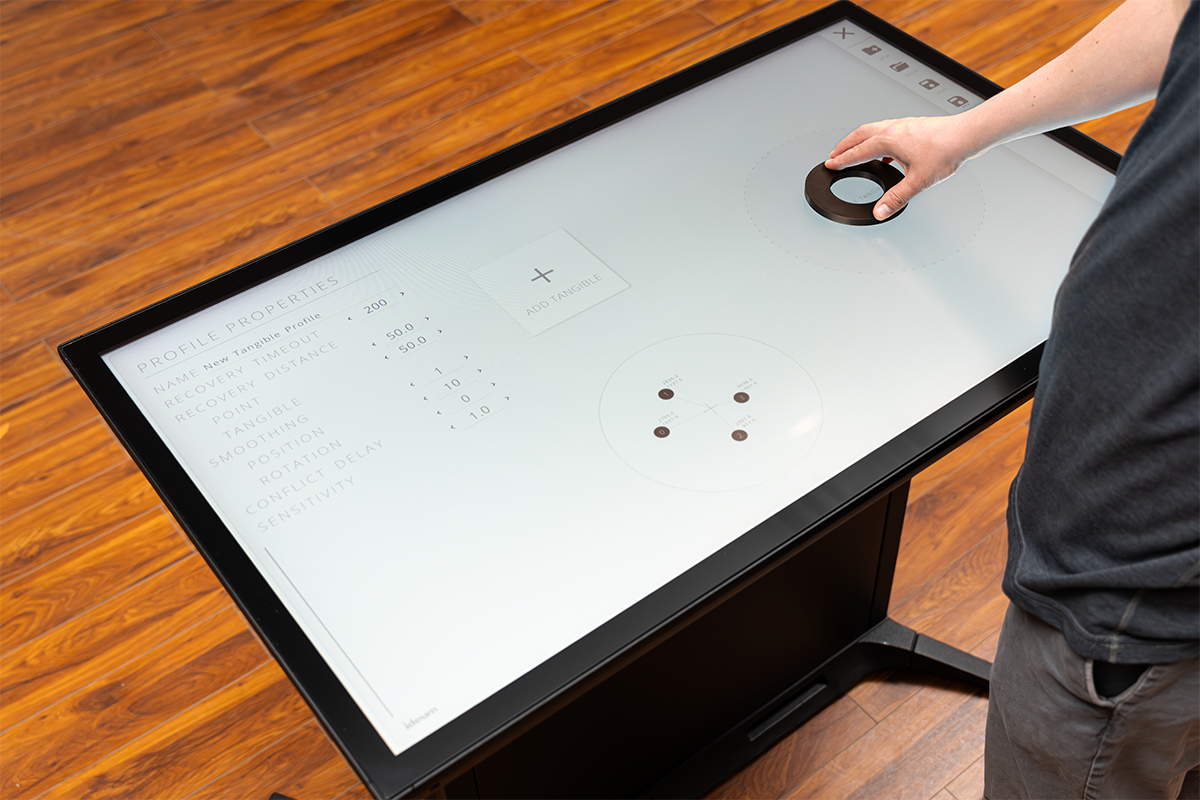
In 2018, Tangible Engine 2.0 was released, with major updates to the functionality and flexibility of the software development kit. This update was a full rebuild from the ground up, which allowed a shift to a modular service model, streamlining the integration of the SDK into other applications. We also improved the tracking and rotation fidelity even further, and added refinement options such as sensitivity control and touch point recovery. Also added was the visualizer utility and an object trainer, which made creating and modifying each tangible profile quick and easy.
Version 2 had many updates over a span of 6 years. The first major update was the addition of support for our extra-large Colossus touch table, which uses a different touch sensor than our smaller tables, but offers a large surface area that is perfect for multiple simultaneous pucks. We also created bindings for Node.js, allowing the creation of web-powered tangible interactives. There was also an update to the multi-screen functionality, as well as a rework of the GUI Media Creator, now called the Rapid Prototyping Tool.
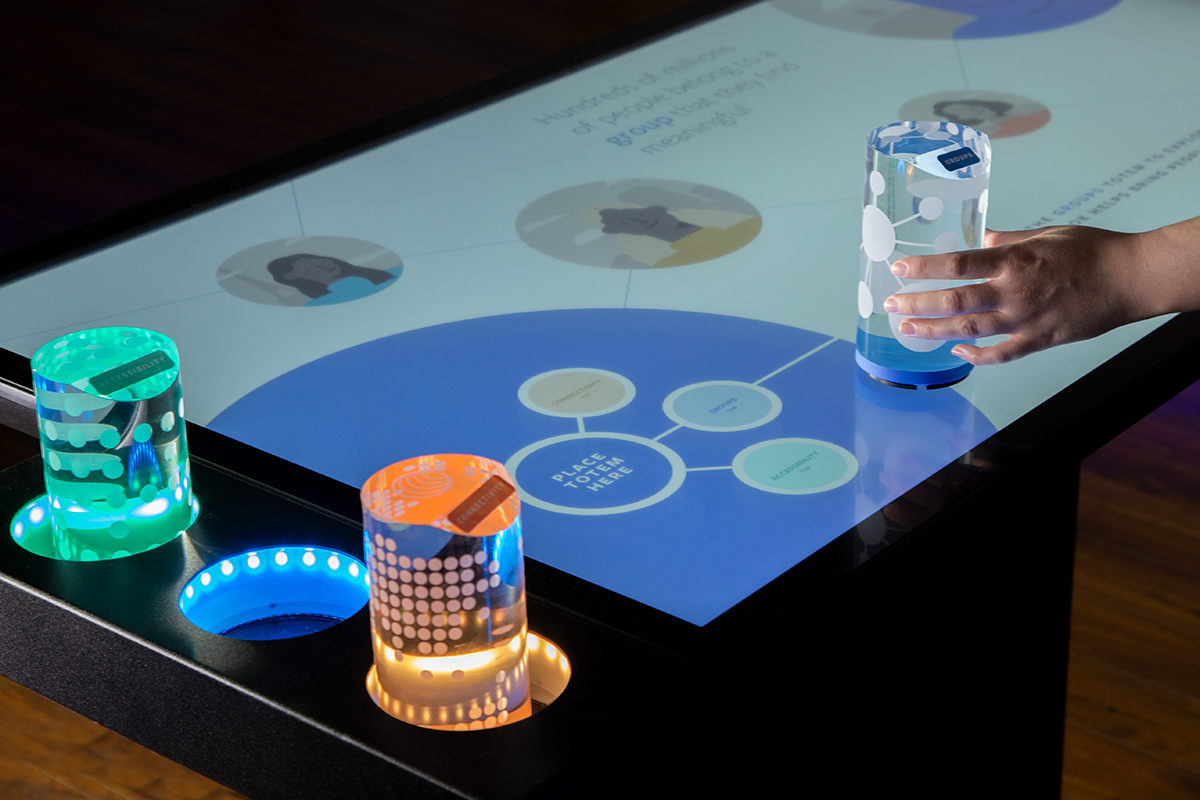
In 2024, we saw the release of Tangible Engine 3.0. This version improved support for the Colossus touch table, including the release of large Colossus tangibles, designed specifically for use on the 86” display, but compatible with the smaller displays as well. Also released were our Beverage tangibles, similar to what was created for the Helios Wine Bar on MSC Cruise Lines, large 5.25” pucks with wood tops that act as coasters for interactive tasting experiences. There were also updates to the communication protocols, speeding up the latency between placing an object & the software responding, which was especially useful in complex multiuser projects that saw a large number of simultaneous tangible and user interactions. We also added tangible profiles for each different tangible pattern and display size, streamlining the tangible training process. Lastly, there were improvements to the Node.js bindings, updating support to the latest version.
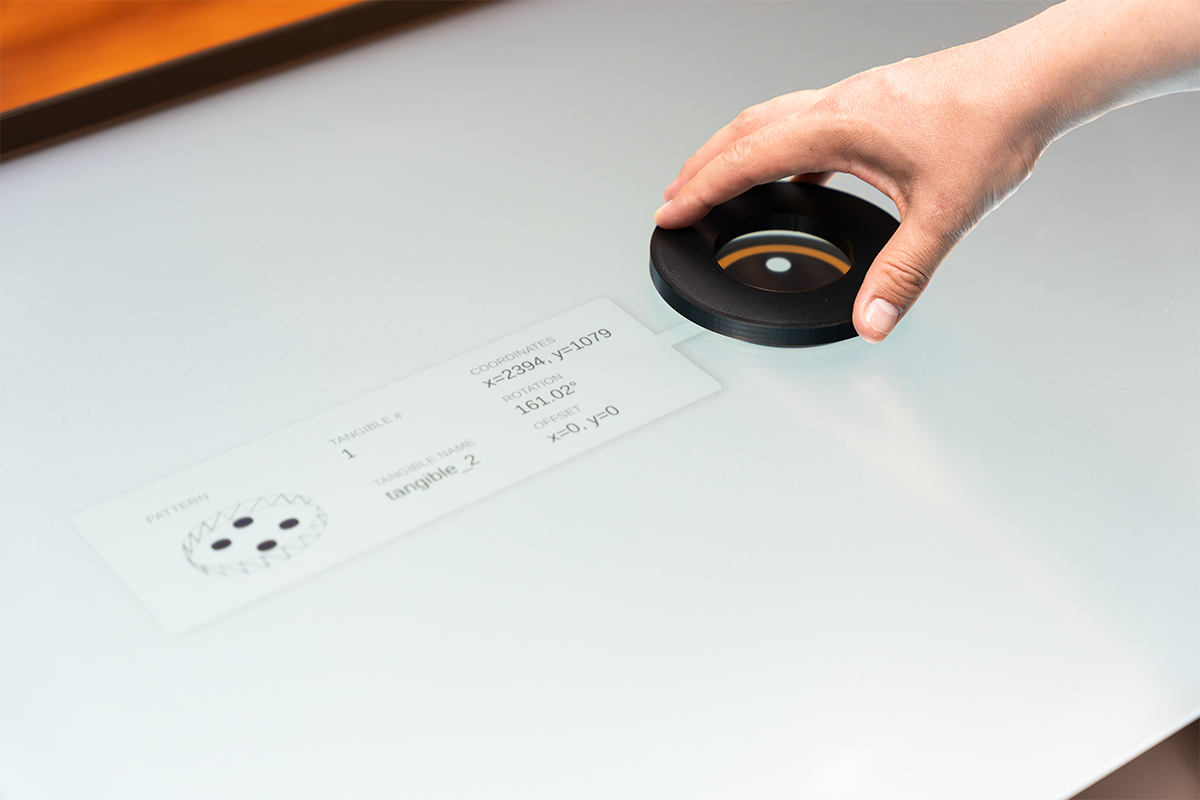
Now, in 2026, we have our first update for Tangible Engine 3. This will add a new tangible size to our lineup - the ring, or “donut”, tangible. A popular choice for developers creating interactives with highly visual content, the ring tangibles will be available as an option alongside our standard pucks, Colossus tangibles, and Beverage tangibles. The ring tangibles will be included with their own profile support in version 3.1, just like the others. We are also exploring adding even more shapes, including early testing with triangles, and broadening our support for custom tangibles.
Keep an eye out for the release of Tangible Engine v3.1 later this spring, and help us celebrate a decade of object recognition on Ideum touch tables!