Dec
17
2025
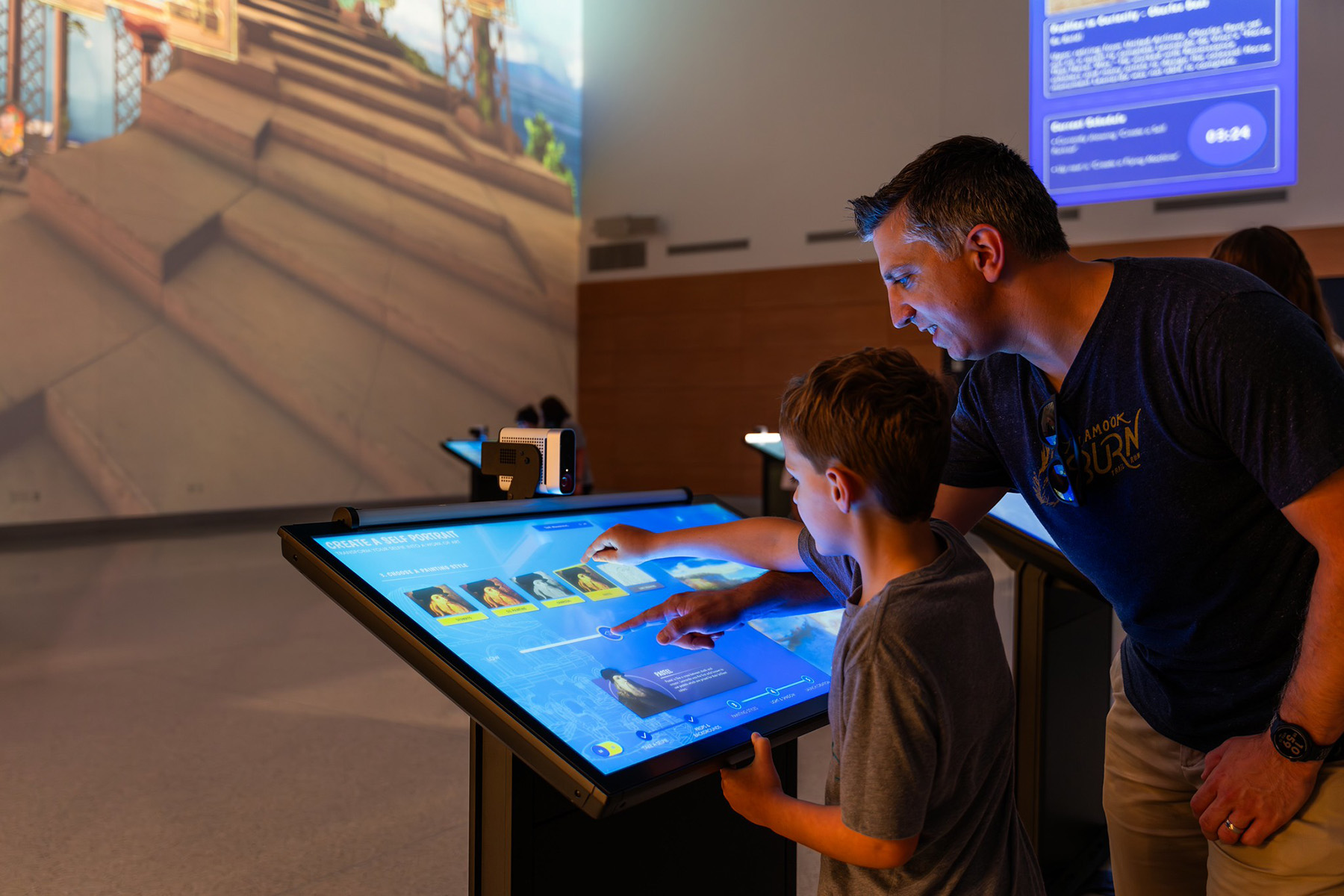
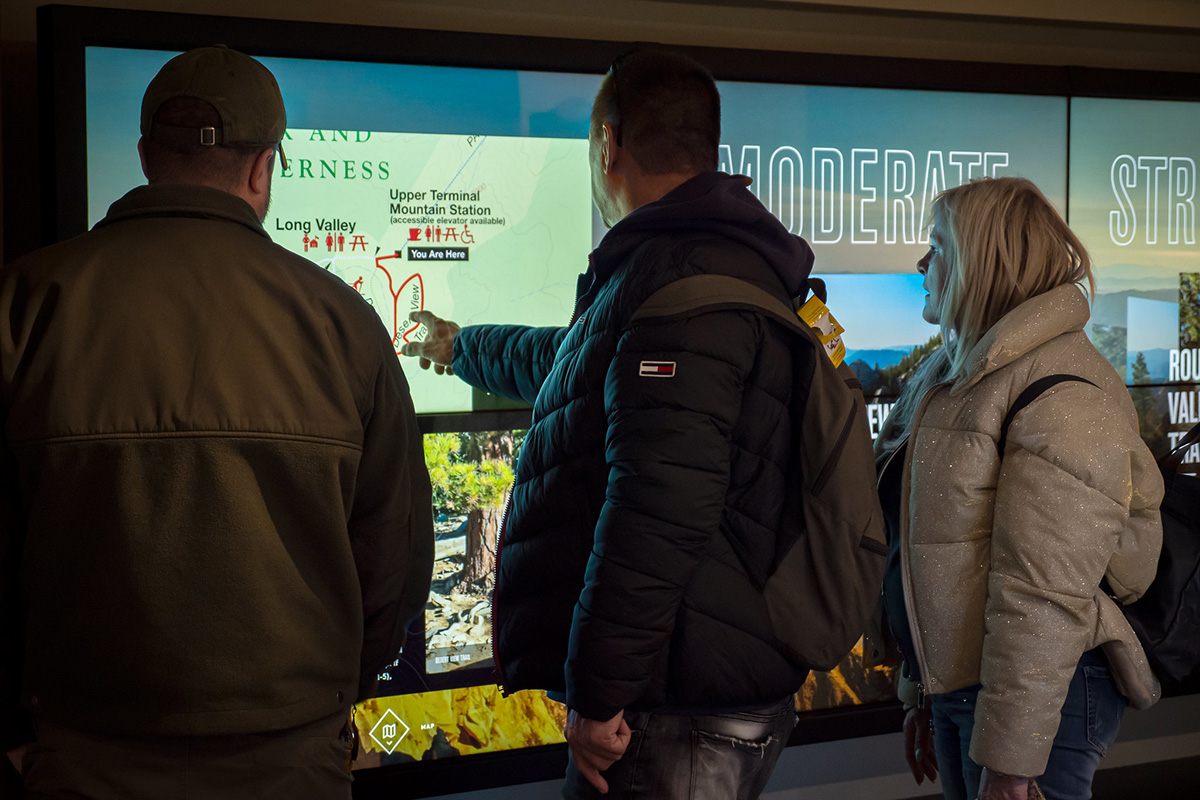
Visitors rarely walk into a museum alone, and even solo travelers hope to share what they discover. Across Ideum’s portfolio, social connection consistently emerges as the core driver of engagement: people want to bond with the friends, relatives, students, or colleagues beside them and to see their own communities reflected in the exhibit. Designing for that impulse means building platforms that invite conversation, cooperation, and friendly competition at every turn.
Think of a multigenerational family spending a Saturday afternoon together. Their shared goal for spending time together isn’t to learn facts about ancient fossils or modern art; it’s to create a shared memory, to laugh at inside jokes, and to feel closer when they leave than when they arrived; a day well spent. If a museum’s exhibits don’t help them converse, collaborate, and discover as a unit, the outing will miss the point, and they’ll blame the institution, not the content. Designing for social success, then, is every bit as critical in exhibit design as curating artifacts or writing interpretive text.
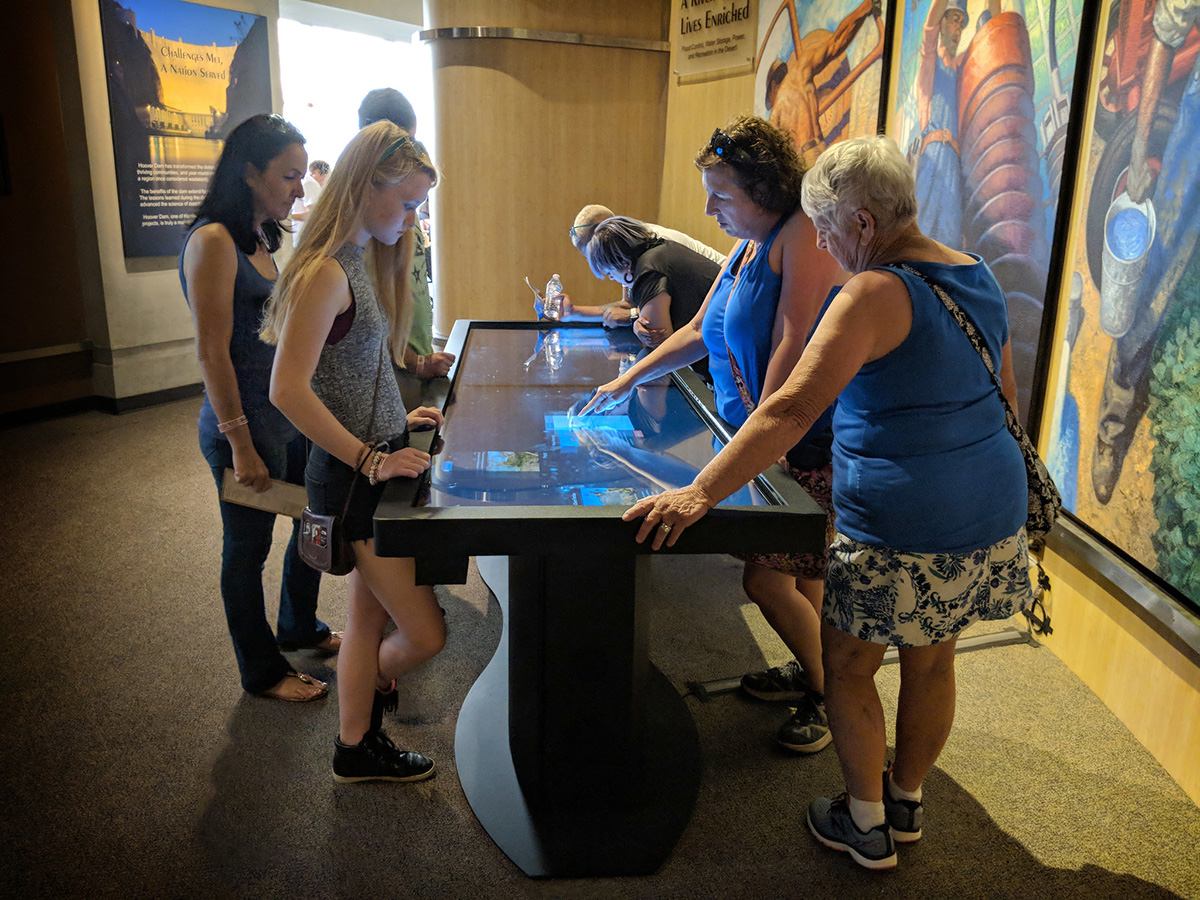
Ideum’s giant multitouch tables, the nearly 90-inch Pano and the 86-inch Colossus, show how sheer scale can spark instant group play. With 40 simultaneous touch points, a Pano lets eight visitors manipulate timelines or pass digital objects back and forth, while a Colossus gathers family clusters around a single sweeping map. Both form factors make it easy for groups to see one another’s gestures, react aloud, and jointly make sense of intricate content.
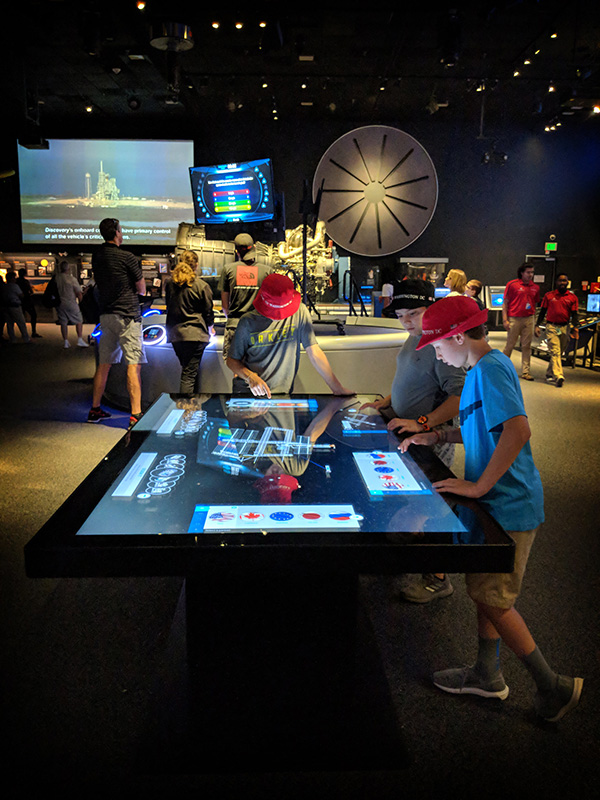
At the Smithsonian National Air and Space Museum, Ideum’s Space Flight Academy quiz extends that idea from touch to teamwork. Fifteen players stand at arcade-style consoles, racing through questions projected on overhead displays. The setup turns learning into a multiplayer game, siblings cheer each other on, strangers become ad-hoc crews, and the line between visitor and participant dissolves.
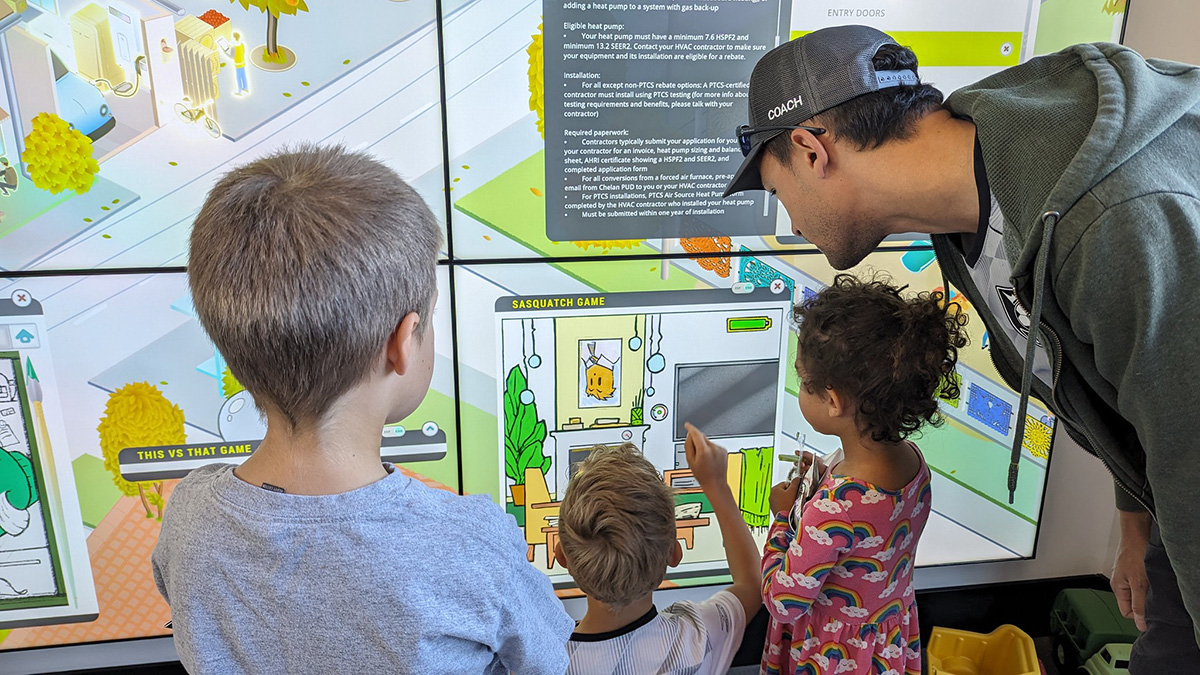
Social design also means recognizing generational diversity. Chelan County Public Utility District’s Energy Experience Wall layers children’s mini-games at toddler height beneath adult-oriented conservation tools. Grandparents, parents, and kids explore the same animated neighborhood together, swapping tips and competing to rein in a mischievous Sasquatch who wastes power. The result is a conversation-starter that continues long after families leave the service center.
Inclusive design keeps those conversations open to everyone. From tabletop heights that meet ADA reach ranges to gesture-based audio navigation and captioning options, Ideum treats accessibility as a catalyst for social exchange rather than a regulatory checkbox. Exhibits offer seated, standing, and child-level points of entry so a child, an elder, or a wheelchair user can ask questions of and with one another. Multiple languages, high-contrast palettes, and quiet “pause” modes ensure no one is left on the sidelines of discovery.
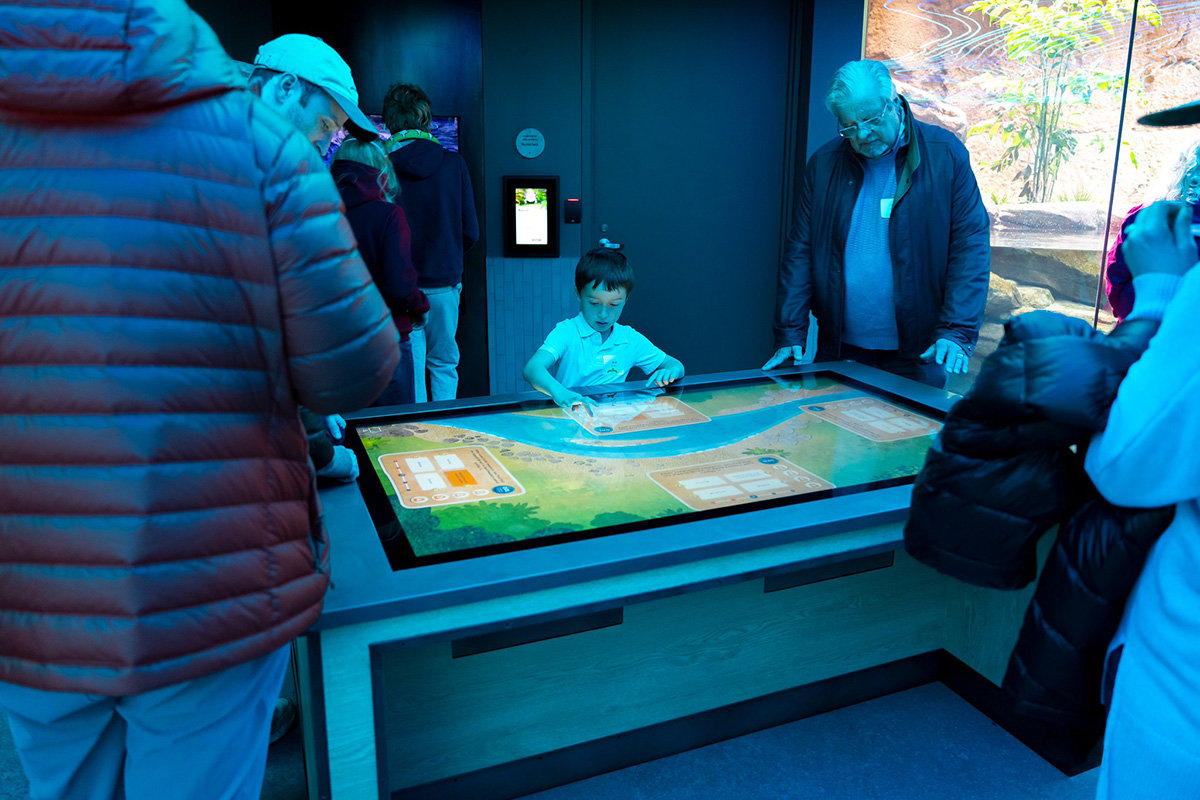
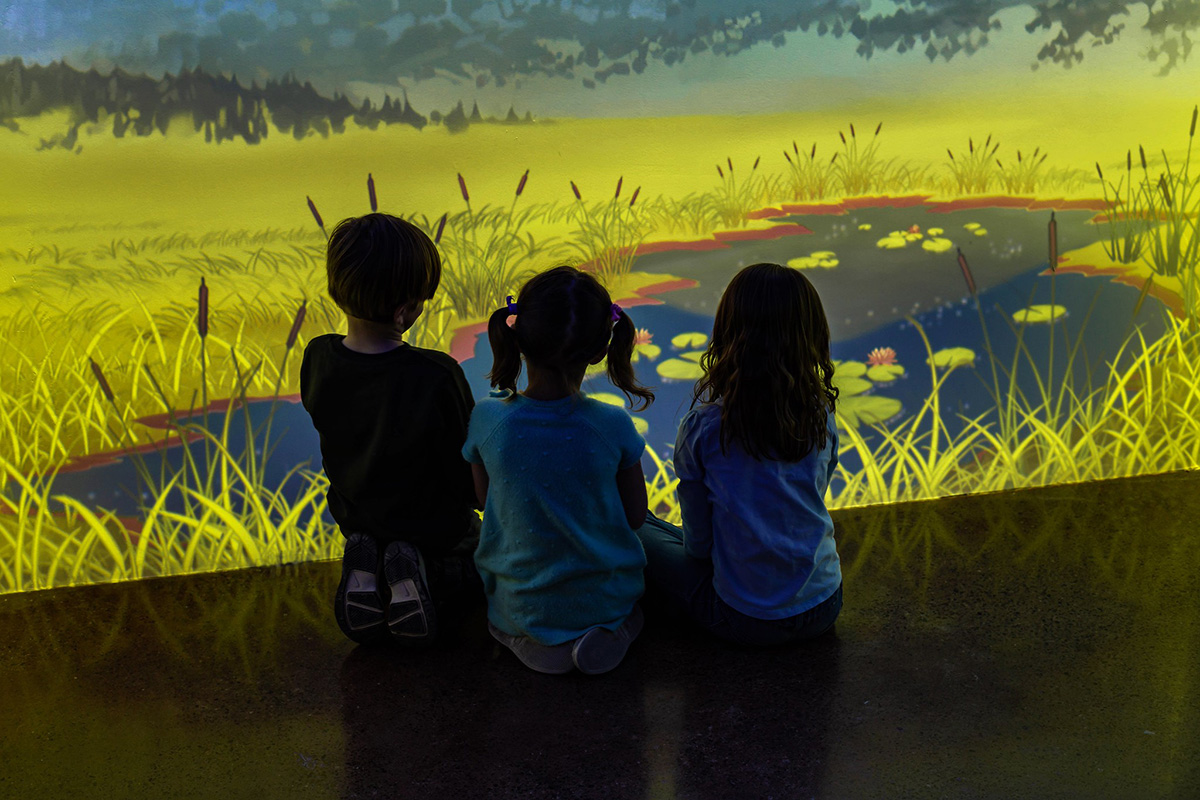
Immersion can be a communal act, too. In the San Diego Zoo’s Wildlife Explorers Basecamp, Ideum built a cooperative ecosystem game, docent stations that engage groups of visitors in testing their conservation instincts against realities, and a full-dome projection that bathes visitors in swirling fireflies. Groups negotiate roles, scientist, explorer, artist, while the media reacts to their collective choices, cementing a shared memory rather than a solitary spectacle.
Sometimes, social connections span generations rather than moments. Voices from the Front at the National WWII Museum lets today’s visitors hold natural conversations with veterans recorded via AI-driven video. A granddaughter can ask what basic training felt like; her grandfather may add his own recollections. The interface foregrounds empathy and dialogue, turning individual curiosity into multi-generational storytelling.
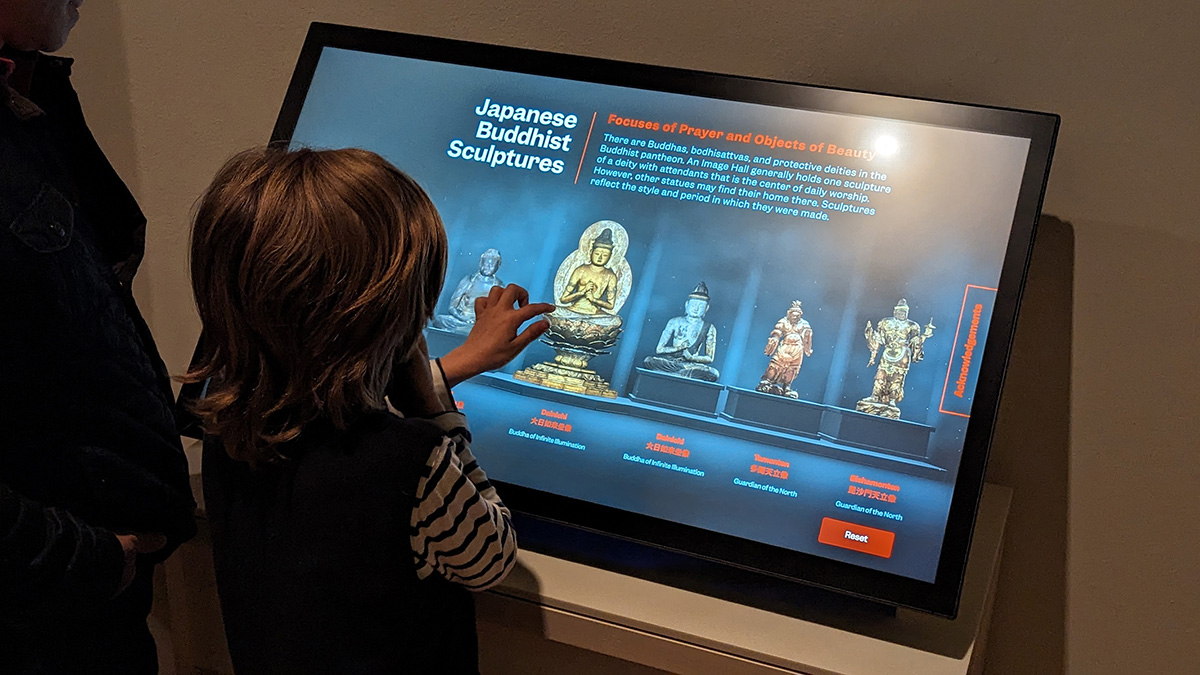
Ideum’s Reader Rail kiosk shows how even a compact touchscreen can spark shared discovery. Its ultrawide 5K display supports up to 40 simultaneous touches, so two teens can zoom in on a Triceratops texture while a teacher scrolls through archival photos with their student, without jostling for space. Deployed from natural history labs to art archives, the Reader Rail turns gallery walls, display platforms, and object cases into conversation-rich, group-friendly landscapes where full-size tables won’t fit or where digital media must complement the artifacts, artworks, or specimens on view.
Content relevance fuels social stickiness. The EM Spectrum exhibit, bundled with a Pano table, lets visitors layer X-ray, infrared, and radio images atop a single object. Watch one guest reveal hidden spiral arms in a galaxy, and you’ll see others lean in, compare findings, and trade “wow” facts, because the tool visualizes phenomena they already discuss in classrooms, gaming forums, or sci-fi fandoms.
The lesson is clear: treat social motivation and universal accessibility not as afterthoughts but as organizing principles. When exhibits acknowledge the friend groups, families, professional networks, and varied abilities guests arrive with, and mirror the issues those communities care about, museums become forums for connection rather than lecture halls. Ideum’s work shows that when you design for conversation, collaboration, and collective wonder, every exhibit becomes an opportunity to create a more socially connected world.
Clear Sightlines & Multi-Sided Access
Arrange objects, labels, and interactives so companions can share space or face one another while exploring, keeping facial expressions and conversation cues visible. Think co-play, where visitors can see and hear one another.
Multi-User Interaction Capacity
Choose simple interactive experiences as well as hardware and software (e.g., ≥40 touch points, parallel controllers, gesture recognition) that let several visitors interact simultaneously instead of queuing one by one.
Role-Based or Co-Op (Cooperative) Gaming Mechanics
Structure activities like cooperative, or “co-op,” video games, where players team up against computer-controlled challenges to reach a shared goal. Assign complementary roles (navigator and researcher, pilot and engineer) so guests must talk, strategize, and celebrate wins together.
Layered Content Depth
Provide quick “glance” takeaways alongside deeper dives, allowing mixed-interest groups to stay together without leaving anyone behind. Add an occasional Easter egg to spark shared curiosity.
Generational & Physical Reach Zones
Place touch targets and text at varied heights (seated, child, standing) and add alternate inputs (gestures, switches, audio), so every family member can participate.
Conversation-Starter Label Copy
Embed prompts and mini-challenges (“Can you find a fossil older than…?”) that nudge visitors to turn to each other rather than just the exhibit.
Real-Time Feedback & Shared Rewards
Use group scoreboards, joint photo moments, or dynamic projections to make success feel communal, not individual.
Flexible Gathering Spaces
Include alcoves, benches, and perch points near interactives where groups can pause, debate, or plan their next stop without blocking traffic.
Environmental Comfort & Sensory Balance
Tune lighting, acoustics, and flow so voices aren’t drowned out and lingering feels pleasant, which is crucial for conversations to flourish.
Accessibility as Social Catalyst
Integrate captions, audio description, tactile elements, multilingual options, and adjustable interfaces so no guest becomes a passive observer. Inclusive design keeps the whole party engaged together.
Design with these priorities in mind, and exhibits move beyond solitary look-and-learn stations to become places alive with conversation, curiosity, and shared discovery, spaces where people connect, learn from one another, and build memories together.