


Nov
12
2025
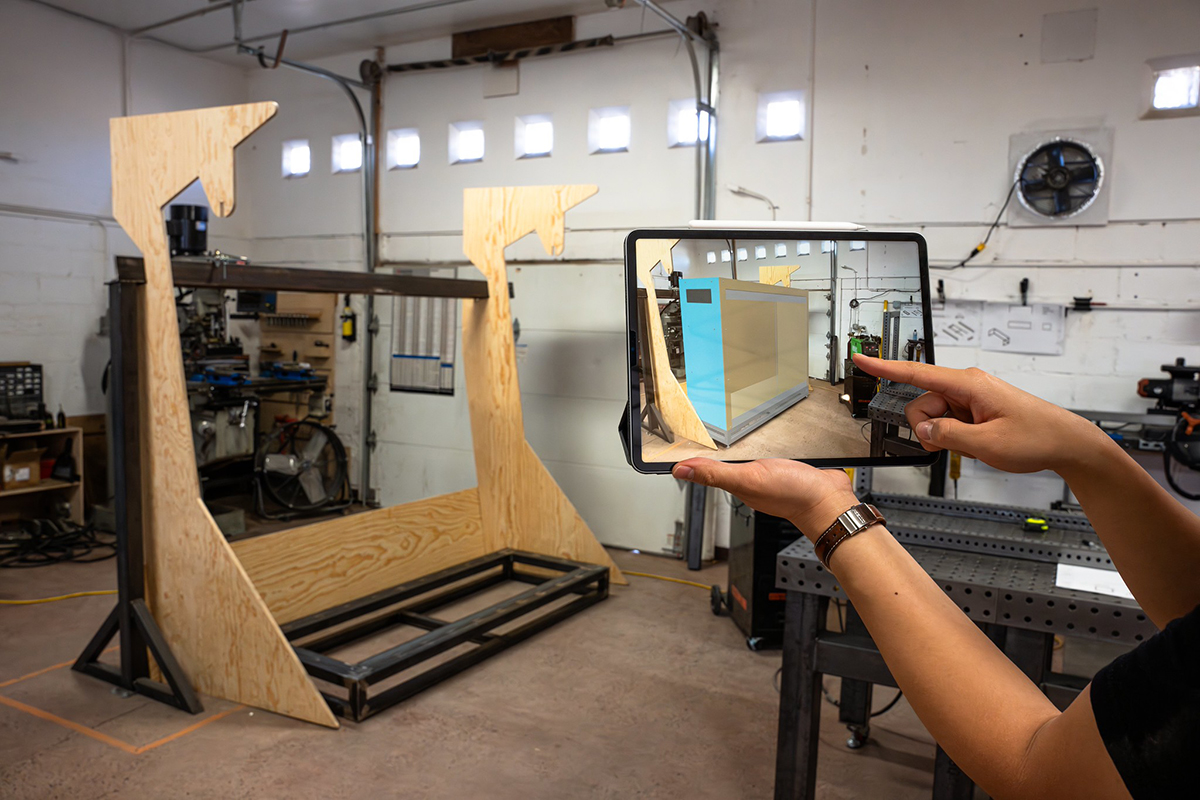
Despite being a professional field since the early 19th century, industrial design is a career that still gets mistaken for strictly the design of industrial machinery or factories. “It’s actually so much more than that,” exclaims the disgruntled industrial designer who was asked this same question a week ago. “It’s very broad!” The Industrial Designers Society of America (IDSA) defines our field as “professional practice of designing products, devices, objects, and services used by millions of people around the world every day” 1. We’re talking about everything from toys, tools, wearable tech, mechanical keyboards, furniture, food containers, and consumer electronics. It is a growing field that provides value through understanding and creating the form, feel, and function of the products we interact with every day. Today, people are not only asking “what is industrial design?” but also asking “what can industrial designers do for our specific industry?"
Within the museum and exhibit world, you can find industrial designers working in the exciting space where an exhibit designer or curator's idea, concept, or napkin sketch is metamorphosed into a physical, usable interactive experience. At Ideum, industrial designers work on a combination of both standard products, such as our large-scale touch screen displays, as well as cabinets, custom touch screen tables and kiosks, and other types of one-offs for exhibits around the world. We work closely in conjunction with technicians, software developers, UI/UX, and exhibit designers to ensure that the physical manifestation is as close to the source material (idea) as possible.
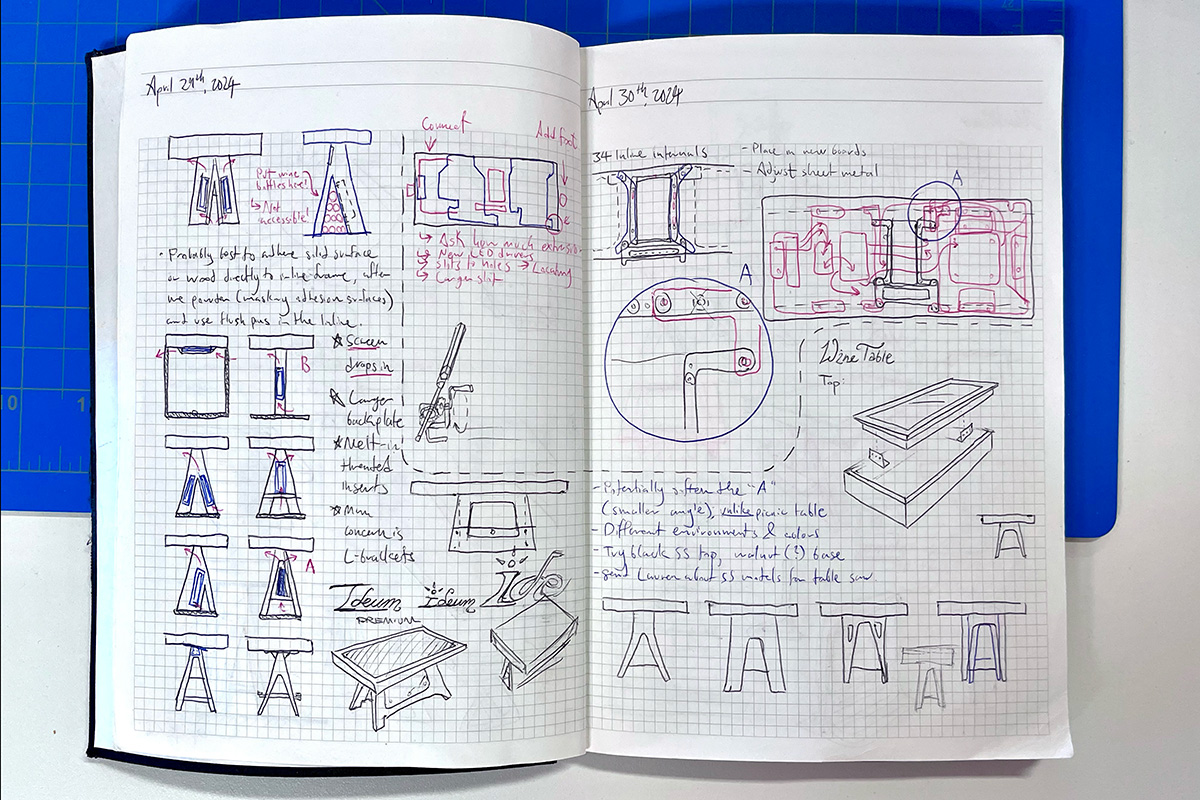
Compared to exhibit designers, who are more focused on the spatial and environmental aspect of the design, industrial designers dedicate their time to detailed, product-level design and delivery of manufacturing and mechanics that feed directly into the fabrication process. For industrial designers at Ideum, this includes making sketches of the overall form of the product, determining ADA accessible placement of controls, creating detailed DfM (designed for manufacturing) CAD models, and even laying out CNC cut files for production.
So what is unique about industrial design in our field of museum and exhibit design? The core difference starts with the most important person in the room and our primary focus as industrial designers: the person using and interacting with the product. In the industry of consumer products, that person is most often the individual consumer who purchases the product and personally uses it for a certain period of time. However, when designing for a museum and exhibit space, the end user becomes broader. It is no longer a singular person; rather, the museum visitor includes the collective of people flowing in and out of the museum that are drawn to engage with the exhibit.
For smaller museums, this could be a couple of hundred annual visitors and some repeat guests, while for larger institutions, the number could be in the hundreds of thousands and mostly first-time interactions. Industrial designers at Ideum consider a broad range of individual needs, focus on tenets of universal design, and strive to cater to ADA requirements. Unlike for consumer products, we no longer have the luxury of depending on the consumer to master the product’s functionality over time. It is of paramount importance that interactives are designed to be easy to understand for first-time visitors.
Working in the museum and exhibit space also informs the materials we use in our products. Unlike industries such as consumer products, which rely on selling large quantities, we produce our interactive exhibits and products in lower quantities and at a higher quality. For example, instead of distributing thousands of items to each consumer individually, we produce a single or small handful of interactives that are experienced thousands of times by museum visitors. To stand up to the force of a thousand guests (and more), we use high-quality materials to ensure that our products are robust and durable.
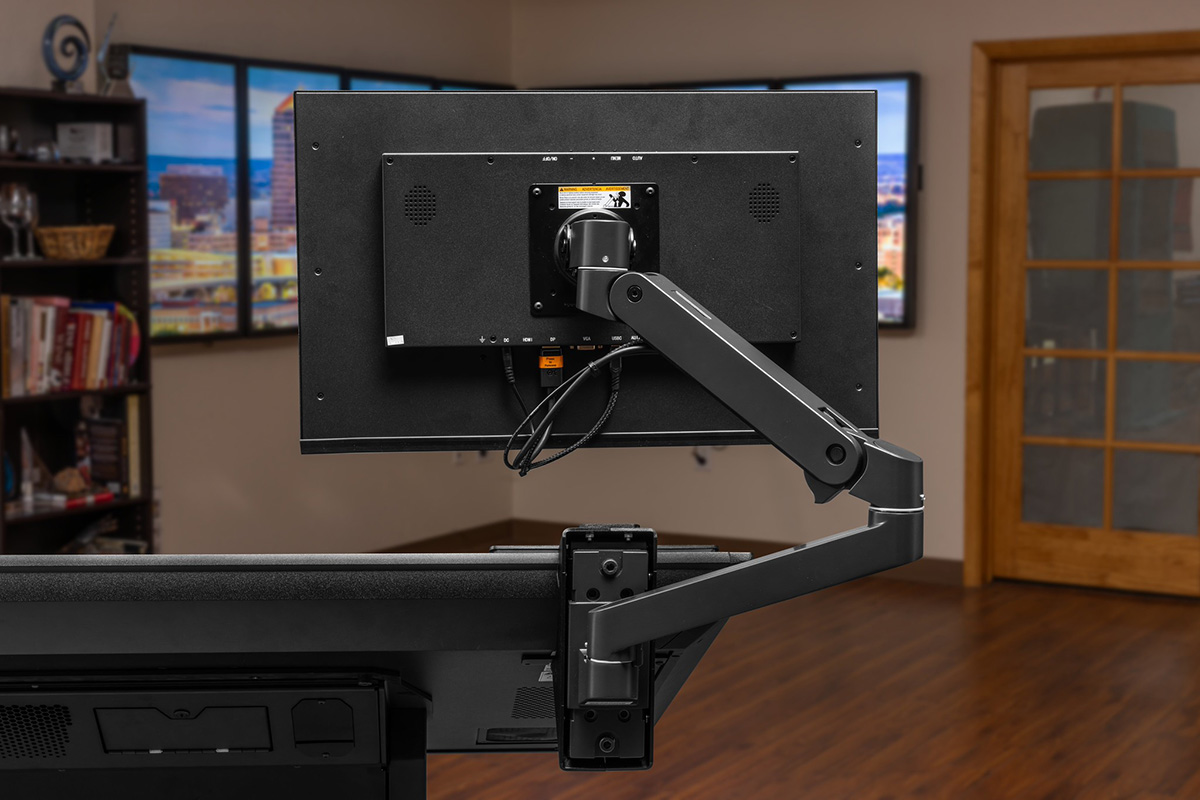
For example, powder-coated aluminum makes up the vast majority of our standard products, from the metal extrusion that protects our screens to the sheet metal that makes up the enclosure around our fans and PCs. This all-metal construction is also primarily mechanically fastened, which allows us to easily replace or update components for our museum clients to keep our standard products going for years to come. At the end of their useful life cycle, most of the metal components that make up our products can be recycled, closing the loop and keeping our components away from the landfill.
Industrial designers focus on the detailed design of physical experiences and interactives to bring the exhibit’s vision to life. Through thoughtful design and understanding of guest needs and manufacturing efficiency, we serve as the vital link between an idea and its physical manifestation. As museums and institutions look to the future of integrating technologies such as virtual reality, we believe that physical objects, interactions, and experiences will continue to capture a sense of awe and wonder for all guests alike, and we look forward with excitement to making it happen.
.jpg)
.jpg)

