Sep
10
2026
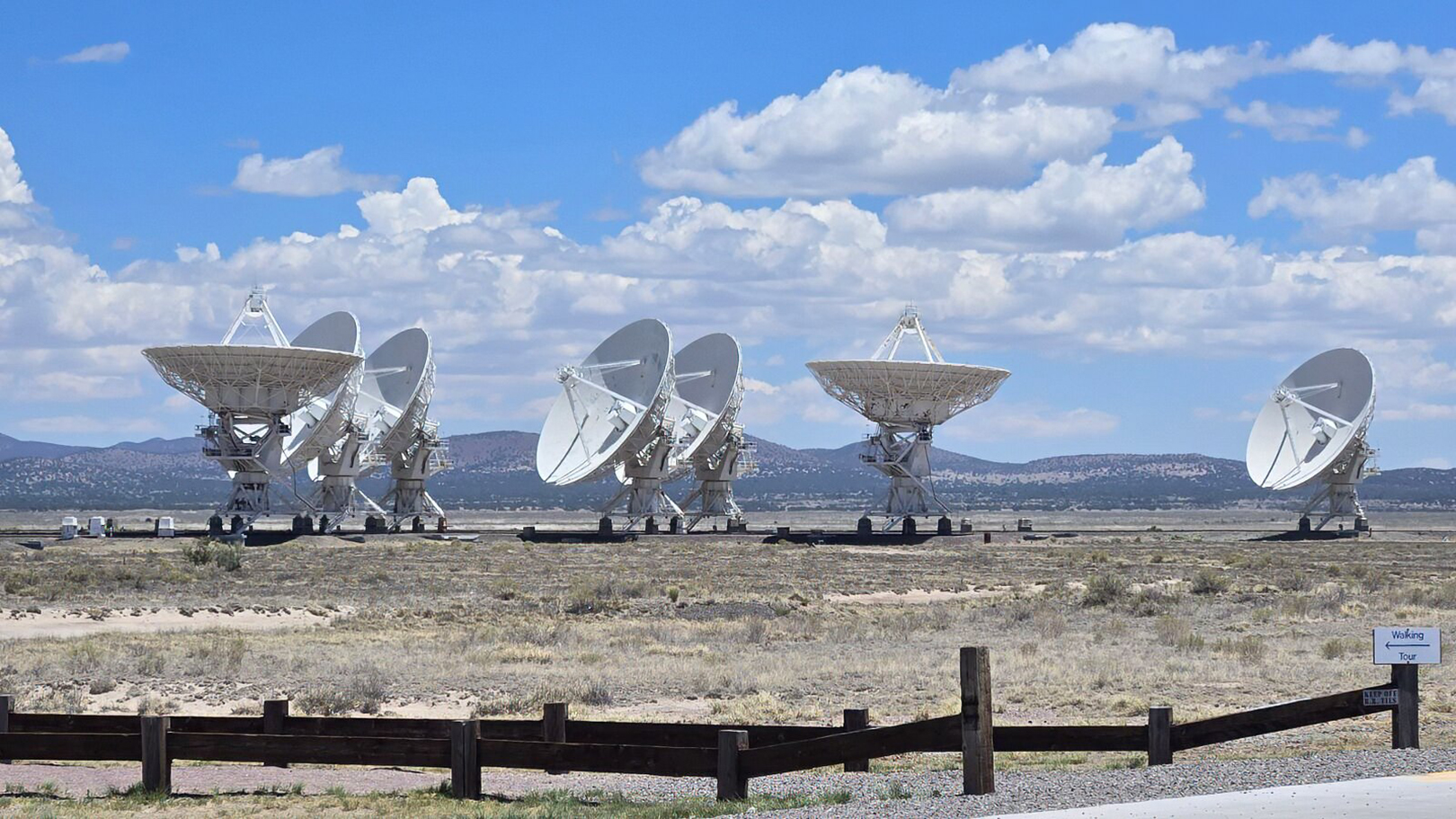
This summer, we had the privilege of working with the National Radio Astronomy Observatory (NRAO) to install our EM Spectrum interactive exhibit at both of their US satellite dish array sites. NRAO selected the exhibit as a way to help visitors learn about radio waves and better understand the role they play in humanity’s ongoing discovery of the universe.
Understanding radio astronomy requires a bit of imagination, especially set against its optical counterpart. Unlike a telescope aimed at the sky, a radio dish doesn’t hand you a clear picture to look at - it hands you data, born from wavelengths the human eye can’t perceive. That’s the gap NRAO set out to close with the installation of our EM Spectrum exhibit, now running at both of their US public sites: the Very Large Array (VLA) in New Mexico, and the Green Bank Observatory in West Virginia.
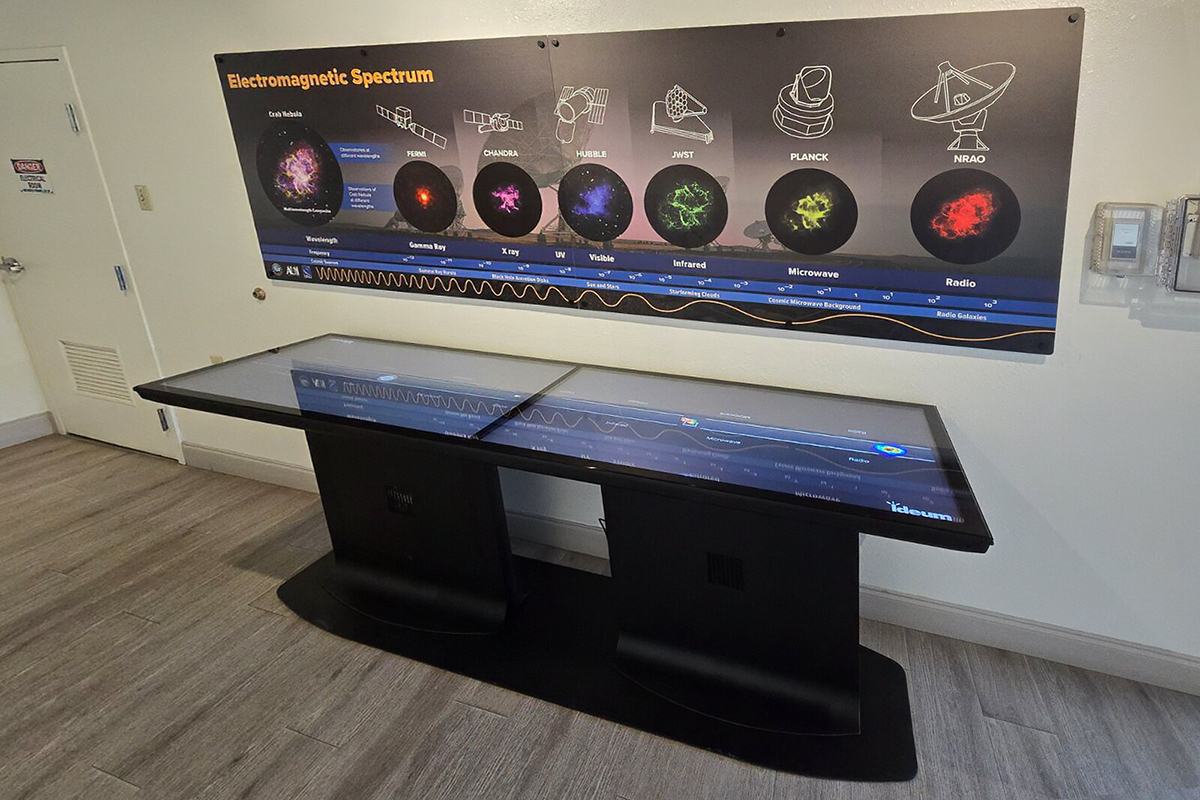
Developed by Ideum, EM Spectrum is a turnkey, multi-user interactive digital exhibit that lets visitors explore how the same object – be it a nebula, a star, or even a chicken dinner – can look dramatically different depending on the wavelength being used to observe it. Running on Ideum’s ultrawide dual 49” Pano touch table, the exhibit invites individuals and small groups to compare images across the full spectrum of light. Along the way, users learn about the properties of each wavelength, and how they are used to study both terrestrial and celestial phenomena.
For NRAO, whose mission is built around a wavelength invisible to the human eye, this exhibit is a natural fit. Radio waves sit at the far end of the electromagnetic spectrum, and helping the public bridge that gap can be a challenge in astronomy outreach. A touch table exhibit that lets people compare objects under different wavelengths makes that leap more accessible, teaching visitors through images, descriptions, and hands-on interaction rather than text alone.
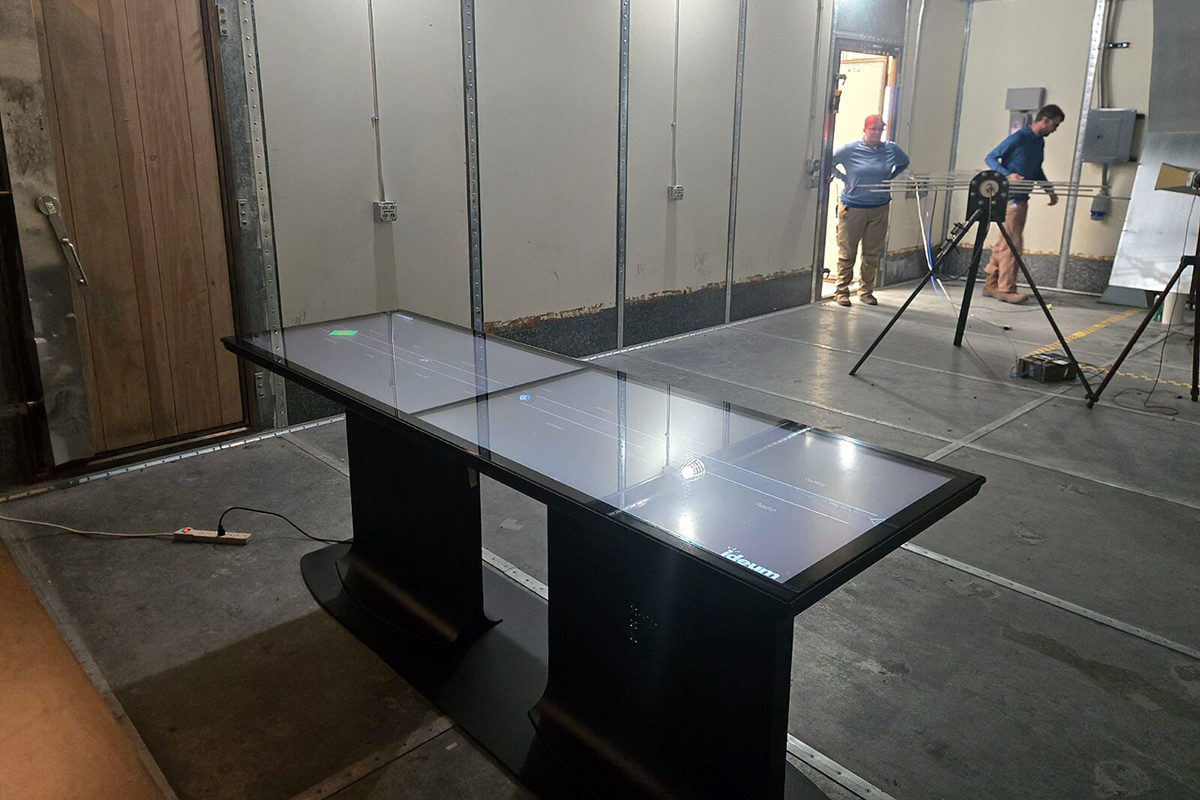
Because both sites sit in areas where radio quiet is taken seriously, we had to consider any radio frequency interference (RFI) the Pano touch table might emit. The Green Bank Observatory lies within the National Radio Quiet Zone, and its visitor space is already housed inside a large Faraday cage, so we didn’t need to shield that table’s emissions to protect the array. The VLA visitor’s center, however, doesn’t have that feature, so we built its table with custom RFI shielding hidden inside the base to keep it from adding any stray signals to the environment. Once on-site, Ideum technicians and NRAO engineering staff brought the Pano touch table to their testing chamber, checking for emissions before clearing it for use in its permanent home inside the visitors center.
With EM Spectrum now installed at both the VLA and Green Bank Observatory, the exhibit greets visitors at NRAO’s two flagship US destinations. Having a consistent, high-quality interactive at each location helps unify the visitor experience across each facility despite the physical distance between them. The timing feels fitting too; installation completed just weeks before NASA’s infrared-based Nancy Grace Roman Space Telescope launched on August 30, 2026, giving us a fresh, real-word reminder that different wavelengths reveal our universe.
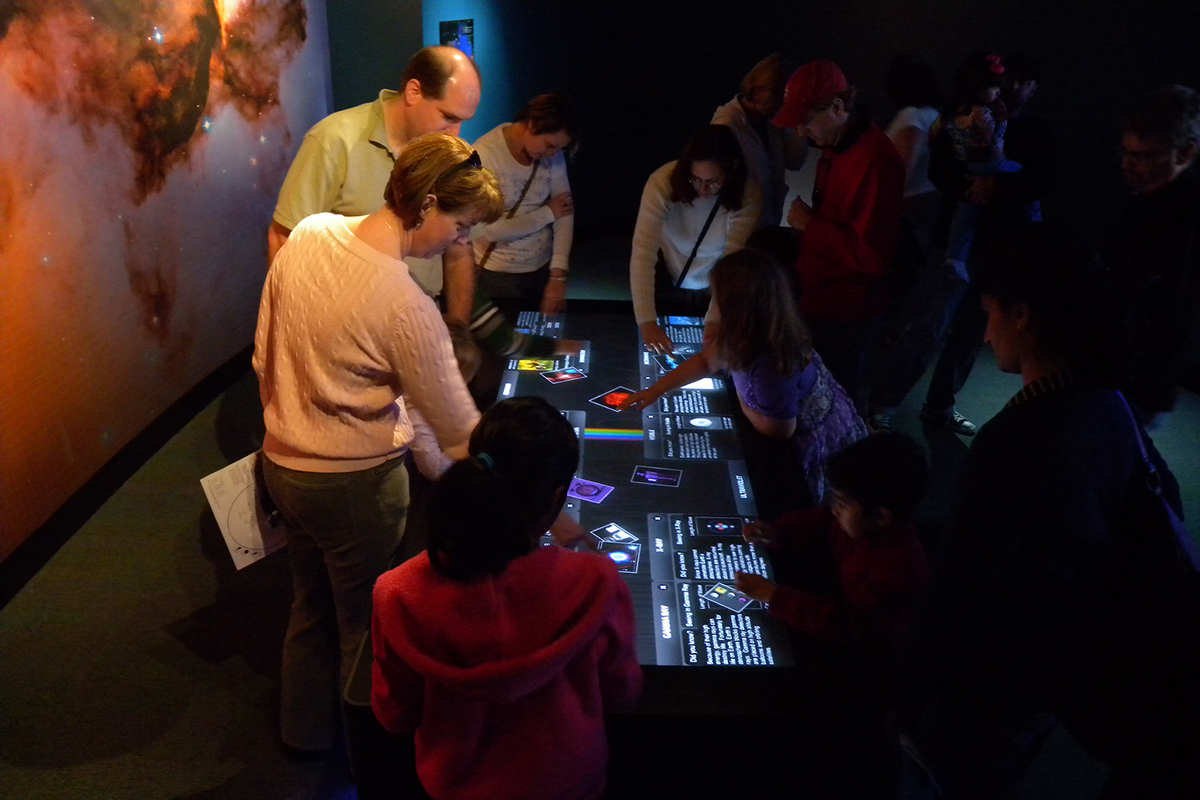
NRAO’s tables are the latest stop for an exhibit with a long history. Ideum developed the first version of EM Spectrum more than fifteen years ago on a projection-based touch table, created for Nashville’s Adventure Science Center in collaboration with Ralph Appelbaum and Associates. Since then, the exhibit has been rebuilt and updated several times, finding a home in new places along the way. Installations at the Griffin Museum of Science and Industry in Chicago and the Telus World of Science in Vancouver brought new multispectral imagery of terrestrial and celestial objects to expand the exhibit even further.
Today, EM Spectrum can be found in science centers, planetariums, and research institutions around the world, including Museo Interactivo Mirador in Chile, Petrosains, the Discovery Centre in Malaysia, and the German Röntgen Museum. Each installation has been localized and made multilingual, allowing a deeper connection with each local audience. In 2025, we began including a lifetime EM Spectrum exhibit license with each purchase of our ultrawide Pano touch table, the same hardware now running the exhibits at the VLA and the Green Bank Observatory.
The EM Spectrum exhibit is now open to the public at both NRAO locations, as well as at dozens of other locations around the world. If you’re interested in an installation at your museum, or you’d like to learn more about Ideum’s suite of turnkey and custom exhibits, reach out to our team and we’ll help you find the perfect fit.
.jpg)