Feb
18
2026
The foundation of any interactive exhibit is the content, your primary audience, and the need that the interactive is serving for that audience. During the Concept Phase of a project, your team might have so many ideas that it can be a challenge to identify and distill these three foundational building blocks. This is a moment when Mind Mapping is a great tool to utilize.
A Mind Map is a way to visually organize your ideas around a main topic to identify how all the ideas connect. You will start with your main topic in the center of the page and then write subtopics that branch off of the main. It’s important to start big and then document topics that get progressively more granular. For example, if the main topic is Weather, subtopics that come from that might be Weather → Autumn → Wildlife Migration → Monarch Conservation. Keep your topics brief, so they are not longer than a few words.
Follow as many threads off of your main topic as you can think of. This is the time to put every idea on the table! While creating your mind map, consider color-coding topics that relate strongly to one another or drawing pictures to attach visuals to what you are creating.
Once you have documented all the relevant topics and ideas you can come up with, you can now begin to edit and further organize your topics. Begin grouping ideas and see what categories emerge. This will allow you to identify what the most crucial ideas within your content are.
Try making a separate Mind Map for each of the three foundational exhibit elements: content, audience, and audience need/exhibit takeaway. This is a very efficient and effective way to determine what the core ideas and groups are for each of those building blocks.
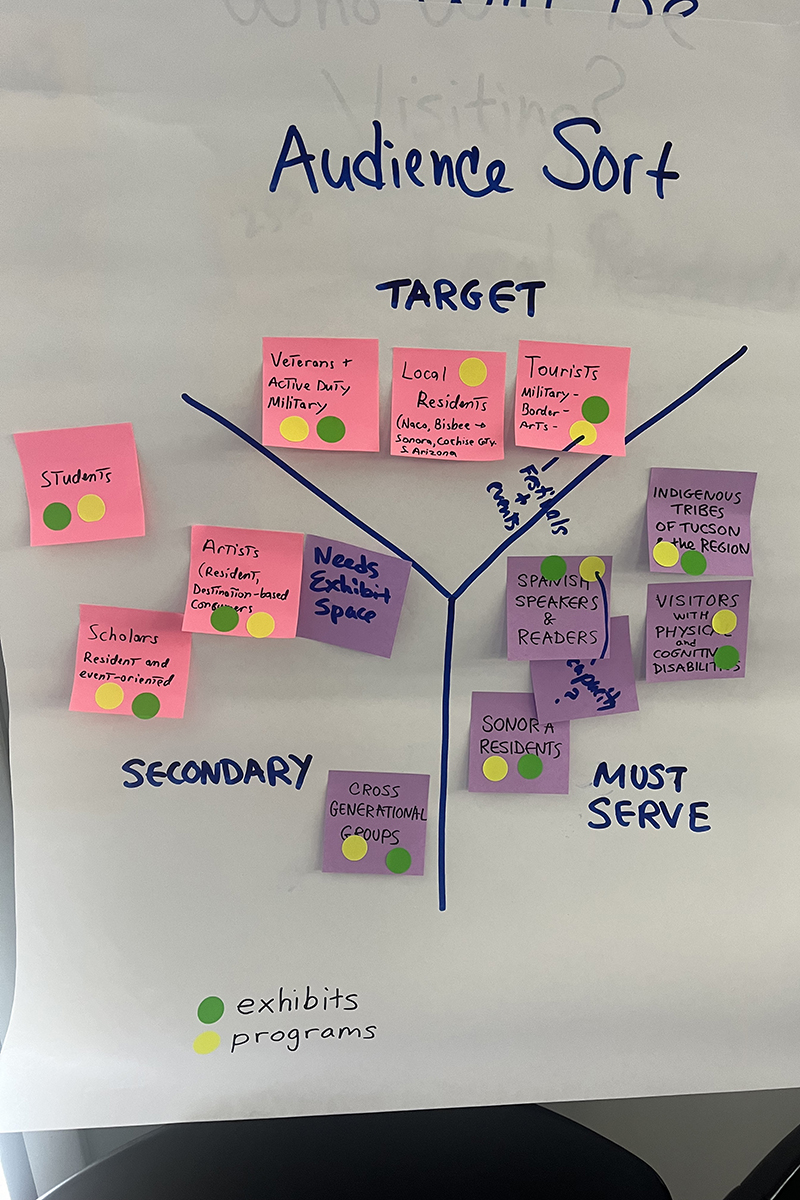
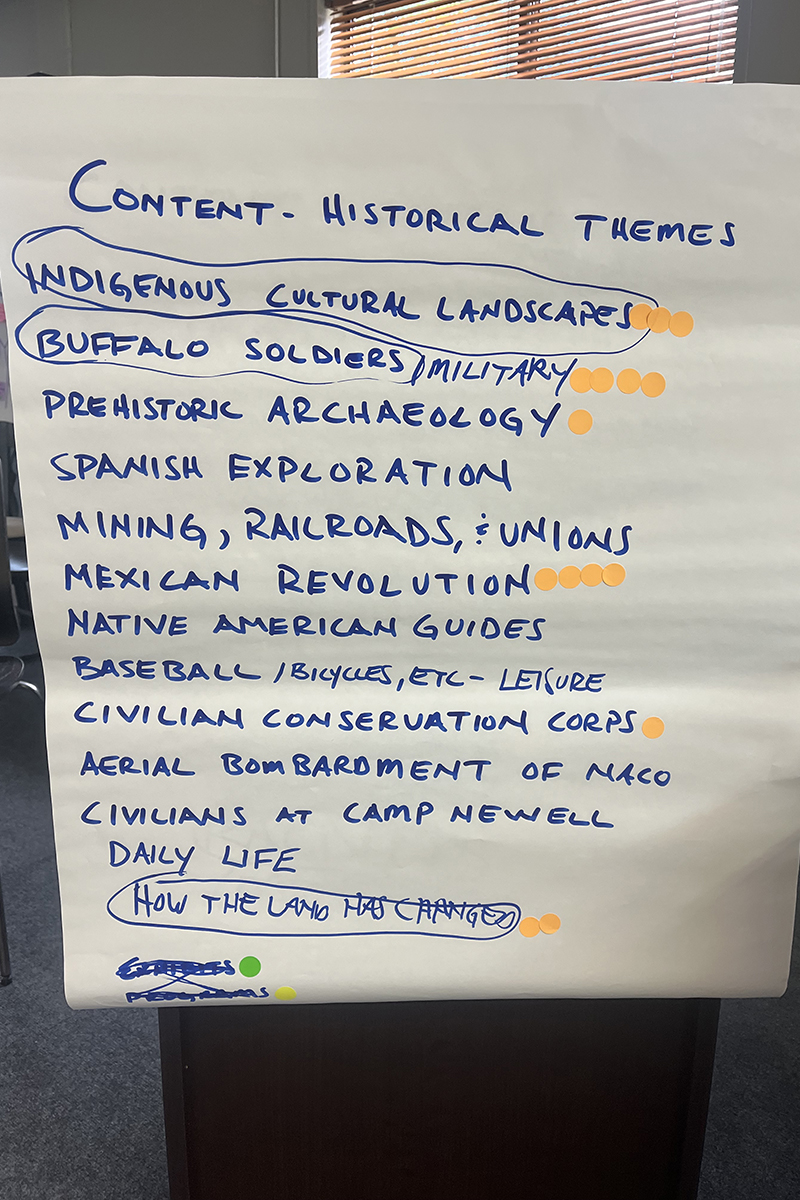
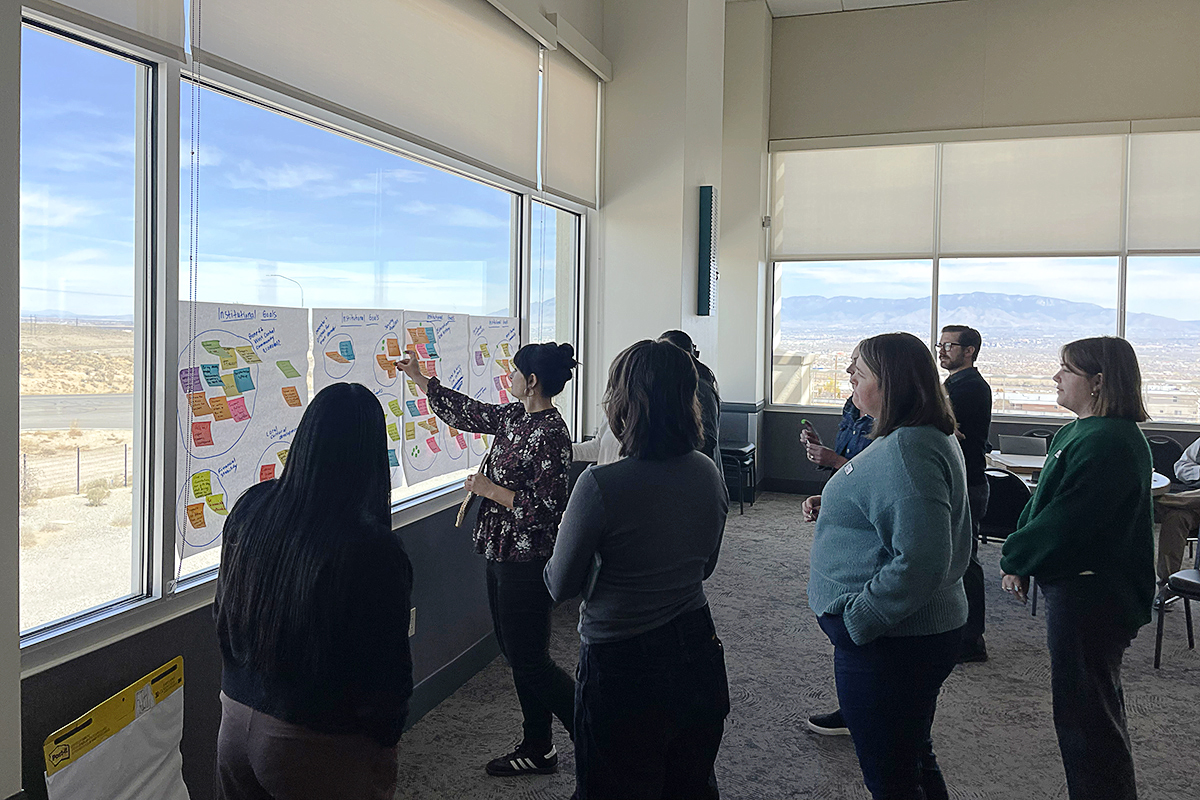
When doing workshops with clients, Ideum will often have large paper pads out that are dedicated to one topic, such as Audiences or Institutional Goals. We then have participants write down all their ideas related to those topics on sticky notes that are added to the topic page. From there, we have people vote for which ideas they think are most important. Votes can simply be marked with a sticker or marker dot next to the idea. This strategy is most effective when you give people a set number of votes they are allowed to cast, so that they are forced to prioritize ideas down to what is most essential. This extra step helps to make the Concepting process more collaborative and reveals what the team’s goals are for the exhibit.
Once you have completed that process, you will have successfully documented and distilled what your guiding concepts and goals for your exhibit are, which is no small feat! This will allow your team to move forward with a cohesive vision and provide guidance while making decisions throughout the entirety of the exhibit design process.