


Aug
20
2025

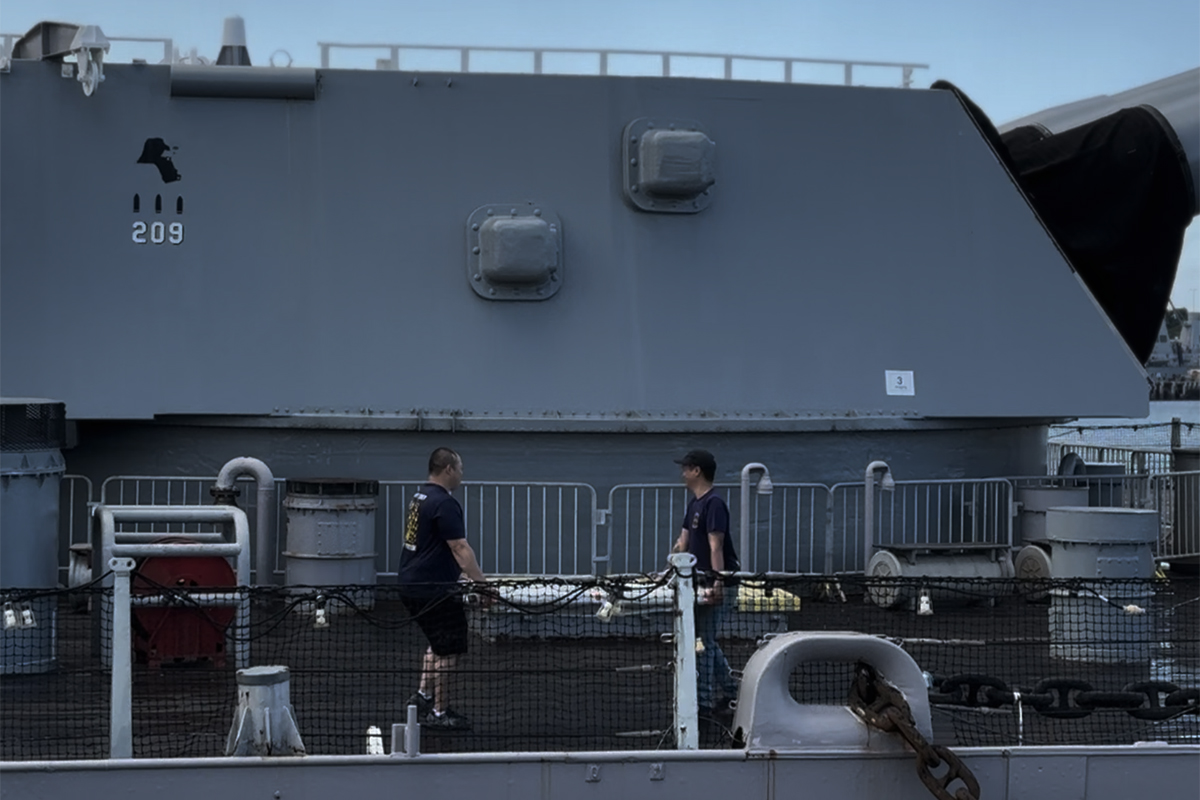
Designing and installing exhibits in historic places is about empathy for the space you are in and engineering for the exhibit you are producing. You aren’t just setting up an exhibit, you are telling the story from inside the history itself! My recent work on the USS Missouri in Pearl Harbor, developing “Pathway to Peace: USS Missouri’s World War II Experience”, was certainly a trial in balancing preservation with innovation, and learning how to embrace a space you cannot change.
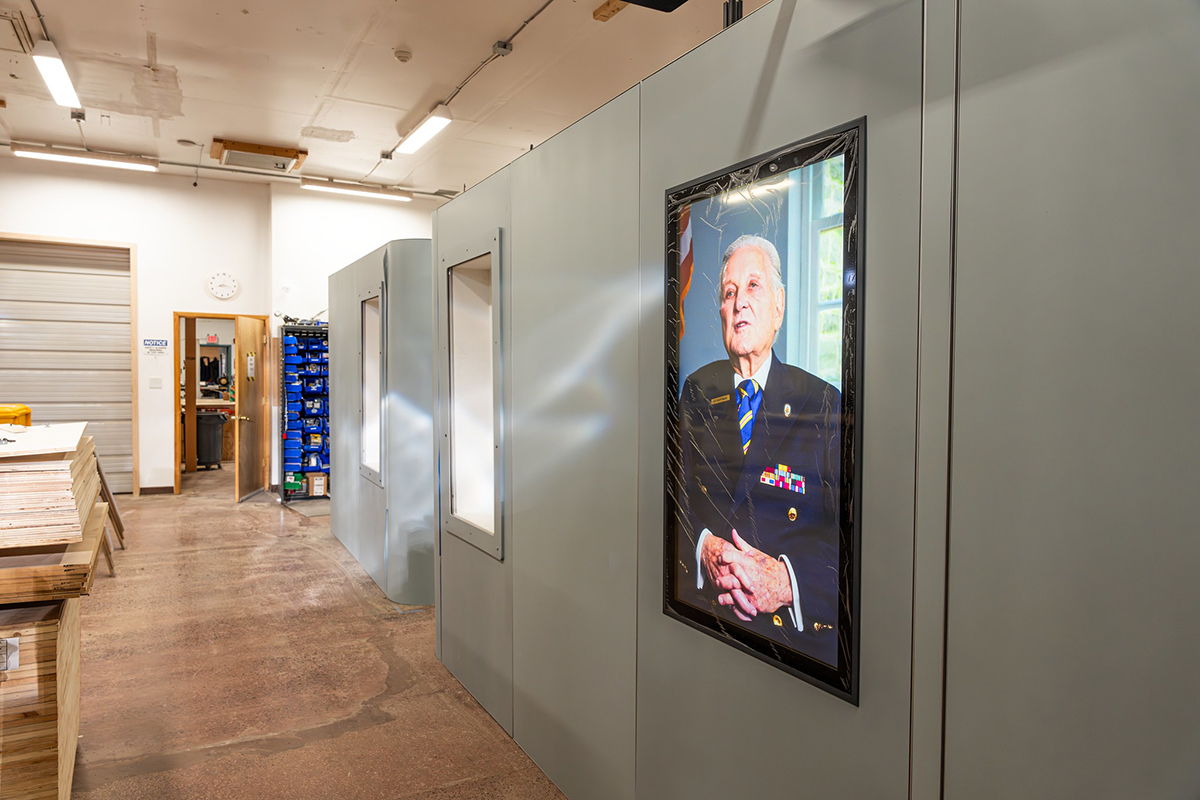
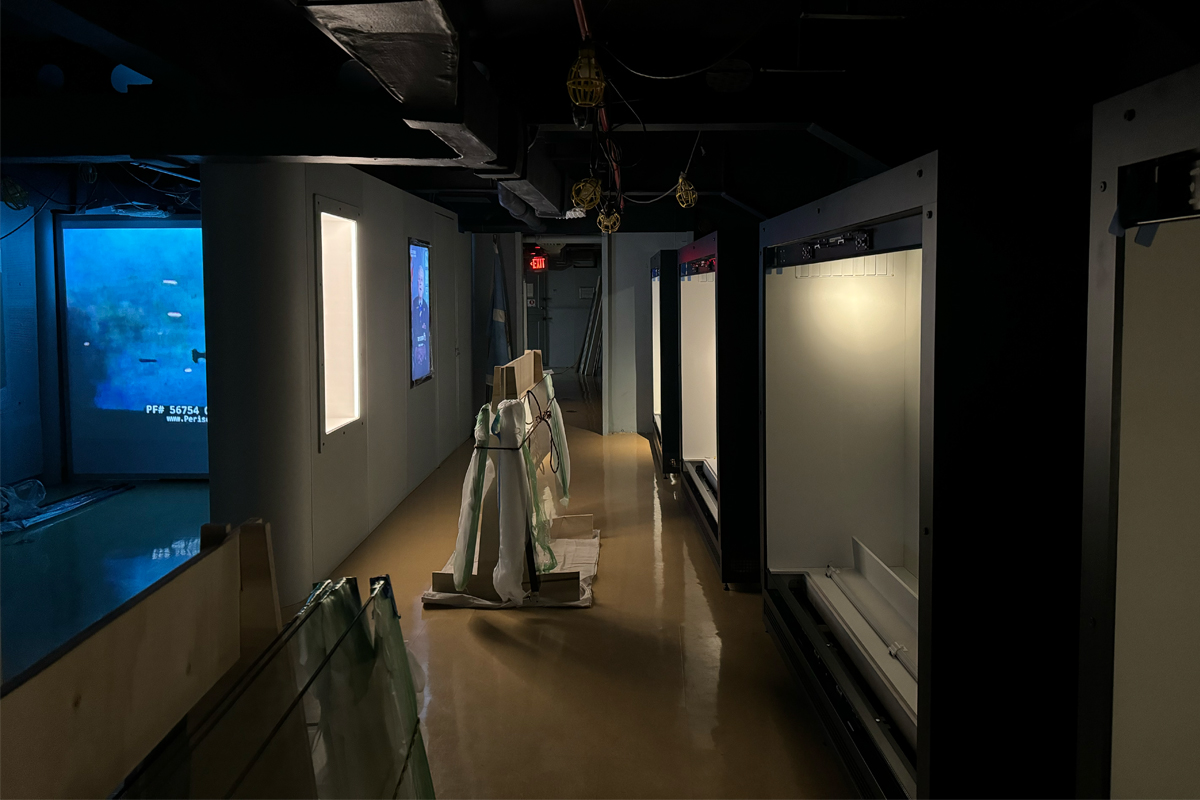
Most museum exhibits have flexibility when it comes to removing old fixtures and walls, but a battleship gives you angled bulkheads, low ceilings, and doorways that can be challenging to pass through on a good day. From the start, we knew we had to work with the ship rather than fight it. Cases were custom-fit to nest between bulkheads; layouts bent and shifted around the existing steel. The ship’s structure had to be treated as part of the exhibit, not as an obstacle.
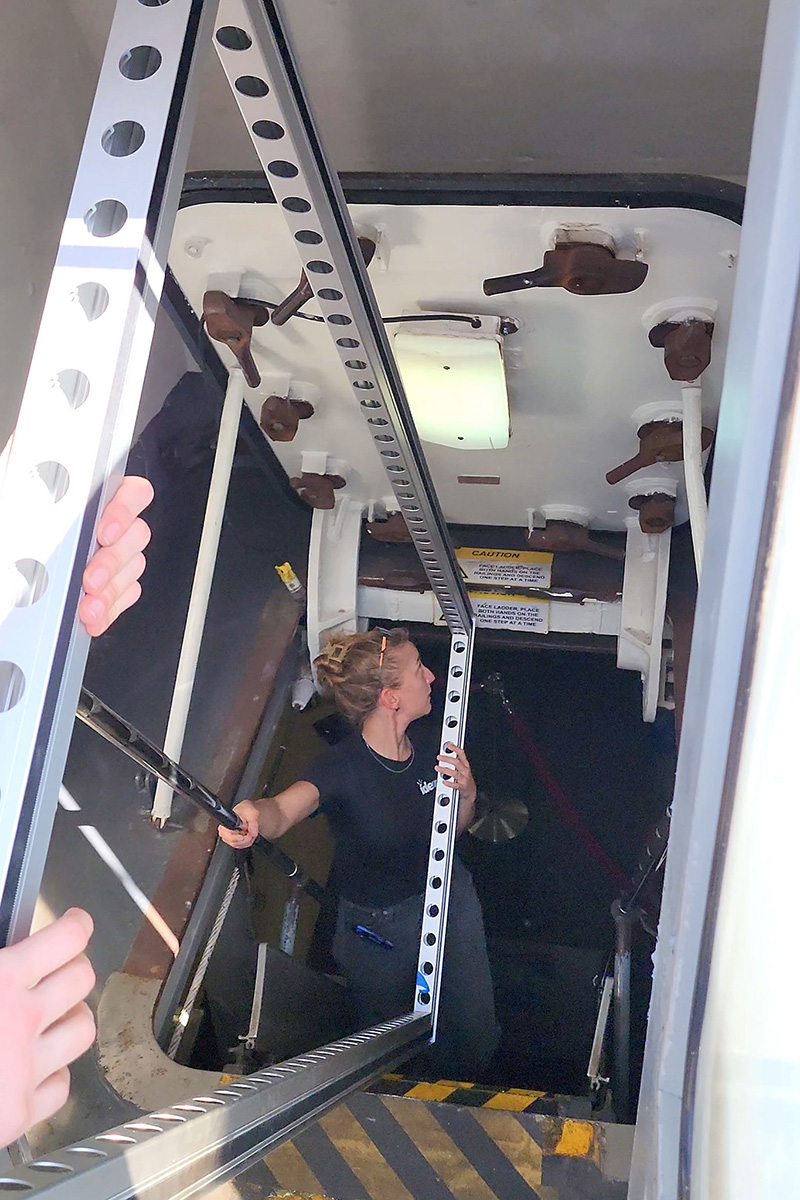
Getting to the Second Deck wasn’t about forklifts or elevators… It was about a single hatch and a lot of patience. Volunteers and staff carried crates down ladders and through narrow passageways. Every installation day required coordination with ceremonies, tours, and the regular life of the memorial. Every element was designed to be broken down, palletized, unpacked, hand-carried, and reassembled below deck. We engineered cabinets to be modular, rehearsed disassembly sequences, and labeled every bolt and panel so the pieces could come back together like a puzzle. This took far more design hours than initially anticipated, but it was the only way to get the job done without major, or rather, impossible alterations.
The Missouri is a patchwork of eras: 1940s steel next to 1980s coatings and 2000s repairs. That mix changes how materials behave; we needed to consider adhesion, corrosion, and outgassing. We leaned on reversible solutions like stainless fasteners with isolators, and museum-grade finishes designed to breathe. Mounting systems were designed to clamp and distribute load without drilling new holes into historic steel, much of which was inches thick, as it is an armored vessel, so we avoided penetrating the armored deck altogether. The materials we used had to be moisture and termite-resistant, while still considering weight and the ability to CNC parts to exact dimensions. Even graphics were planned as magnet-attached, stand-off panels that wouldn’t trap moisture against paint.
Electrical work on an 80-year-old battleship isn’t straightforward. You find the original three-phase distribution living alongside decades of retrofits and patches. The safest choice was to work with the electrical engineers who are actively preserving the ship, and have them perform the wiring after we determined the light layout and capacity specifications. Adding surge protectors and backup batteries to the sensitive A/V equipment was necessary in the event there was an issue with the original power system.
In the end, the Missouri herself is the primary exhibit. Our role was to add layers of context without drowning out her voice. The Pathway to Peace experience draws on personal artifacts, archival footage, and interactive interviews, so visitors hear directly from the sailors. I believe this project proved that the best exhibits in historic spaces are the ones that the place itself would approve of. On the Missouri, that meant designing every element to be sensitive to the layered history already present in the steel, paint, and wiring. It meant embracing the ship as a living backdrop rather than a static container, a setting that still moves, breathes, and carries the weight of its service. When you leave a site like this intact while making its story sharper, you’ve not only done the job right, you’ve added to a legacy that will outlast the exhibit itself.
.jpg)
